Turning operational feedback into development work requires a defined problem, a scope of changes, and expected behavior to check after implementation. When multiple agents take over successive tasks, the reasoning behind those decisions must travel with the work. The structure needs to preserve the development objective and review criteria as more information arrives.
NineT Lab built a workflow that connects operational information gathering, product-owner decisions, tickets, specifications, work plans, implementation, and review. Information gathering and change decisions have separate responsibilities, while documented requirements provide a shared reference across stages.
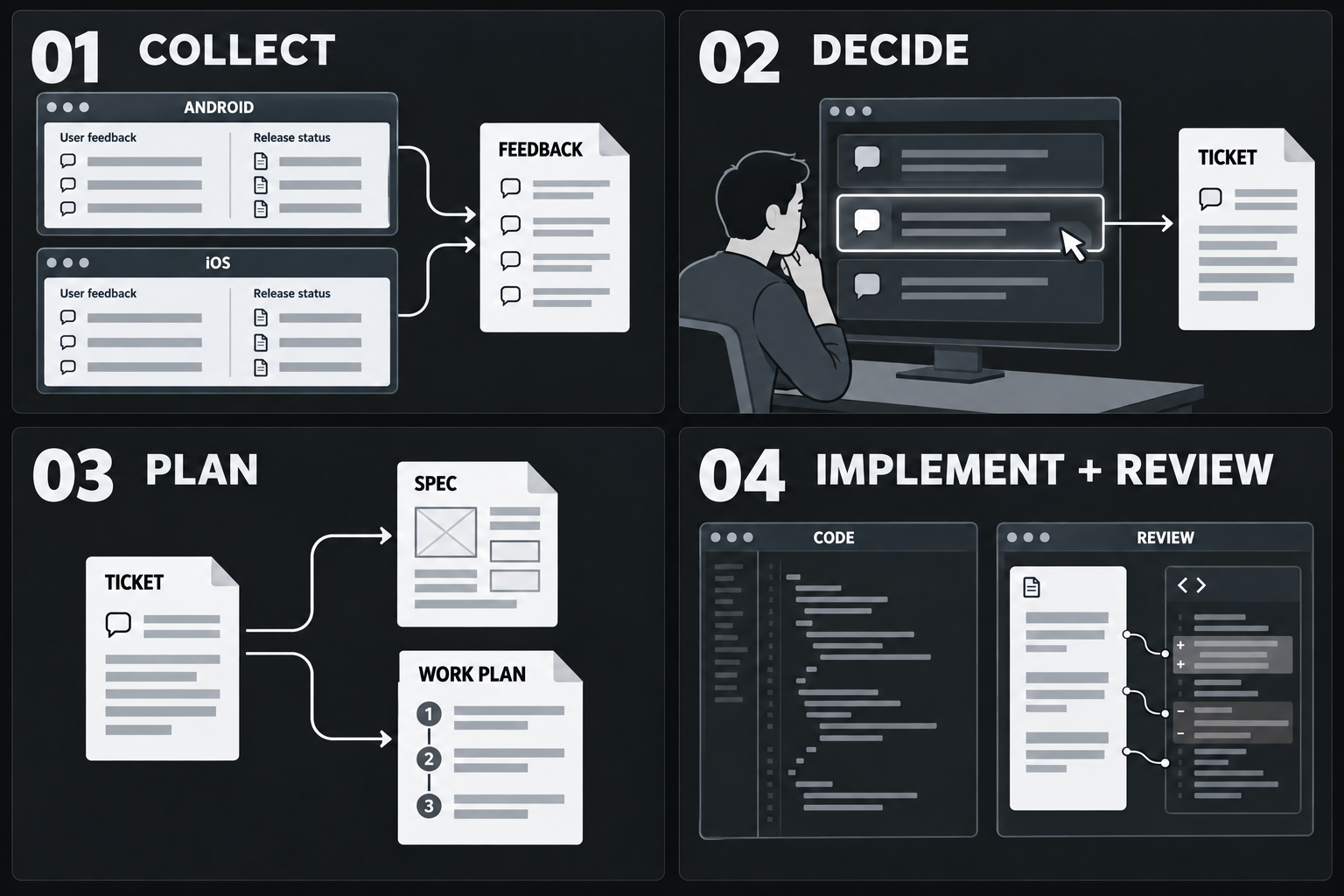
Separating information gathering from change decisions
Console observations and user feedback are inputs to improvement decisions. Choosing which problem to address and how much to change requires considering the product’s current goals and operational constraints. This is why the product owner decides when collected information should become development work.
Agents gather operational information; the product owner decides what to address and the scope of changes. Subsequent agents use that decision to plan and develop. Defining responsibility at each stage makes clear which tasks automation performs and which decisions belong to a person.
- Agents · automated collectionGather operational feedback
Check operational information and improvement requests
- Product owner · decisionsDecide the direction and scope
Select feedback to address and define the scope of changes
- Agents · planningDefine requirements and work plans
Write tickets, specifications, and work plans
- Agents · developmentImplement and review
Implement the changes and check them against the requirements
Documents that carry requirements across stages
A ticket defines the problem and unit of work. A specification defines expected behavior and the scope of changes. A work plan translates these into implementation tasks and their sequence. The three documents address the same improvement request from different perspectives. Requirements established during planning remain a shared reference for implementation and review, so an agent taking over the work can understand the reason for a change and its scope.
- TicketWhat needs to change?
The problem and unit of work
- SpecificationHow should it behave?
Requirements and scope
- Work planIn what order should it be built?
Implementation tasks and sequence
Reviewing requirements and the impact of changes
Review checks whether the implemented behavior addresses the original request and whether the changes fit the agreed scope. It must also consider effects on the existing structure and surrounding behavior. The assessment of requirements and change impact provides the basis for deciding whether the work is complete.
In the shared development workbench, review findings are checked against the implementation before the necessary corrections are made, and the affected parts are verified again. The workflow described here extends that planning, implementation, and review structure to improvement work initiated by operational feedback.
- Purpose
- The operational problem to address
- Requirements
- Expected behavior and scope of changes
- Existing structure
- How the changed area relates to surrounding behavior
- Problem addressed
- Does it address the original request?
- Requirements met
- Do behavior and scope match the requirements?
- Change impact
- How is surrounding behavior affected?
Designing for AI transformation and maintenance
Applying this structure to another business process starts with defining information sources, decision authority, execution scope, and review criteria. These provide a basis for translating a client’s procedures into tasks that agents can perform as part of AI transformation. NineT Lab aims to preserve the context of work so future maintainers can understand the reasons for changes, the requirements, and the implementation and review results.
In practice: Maumjaro
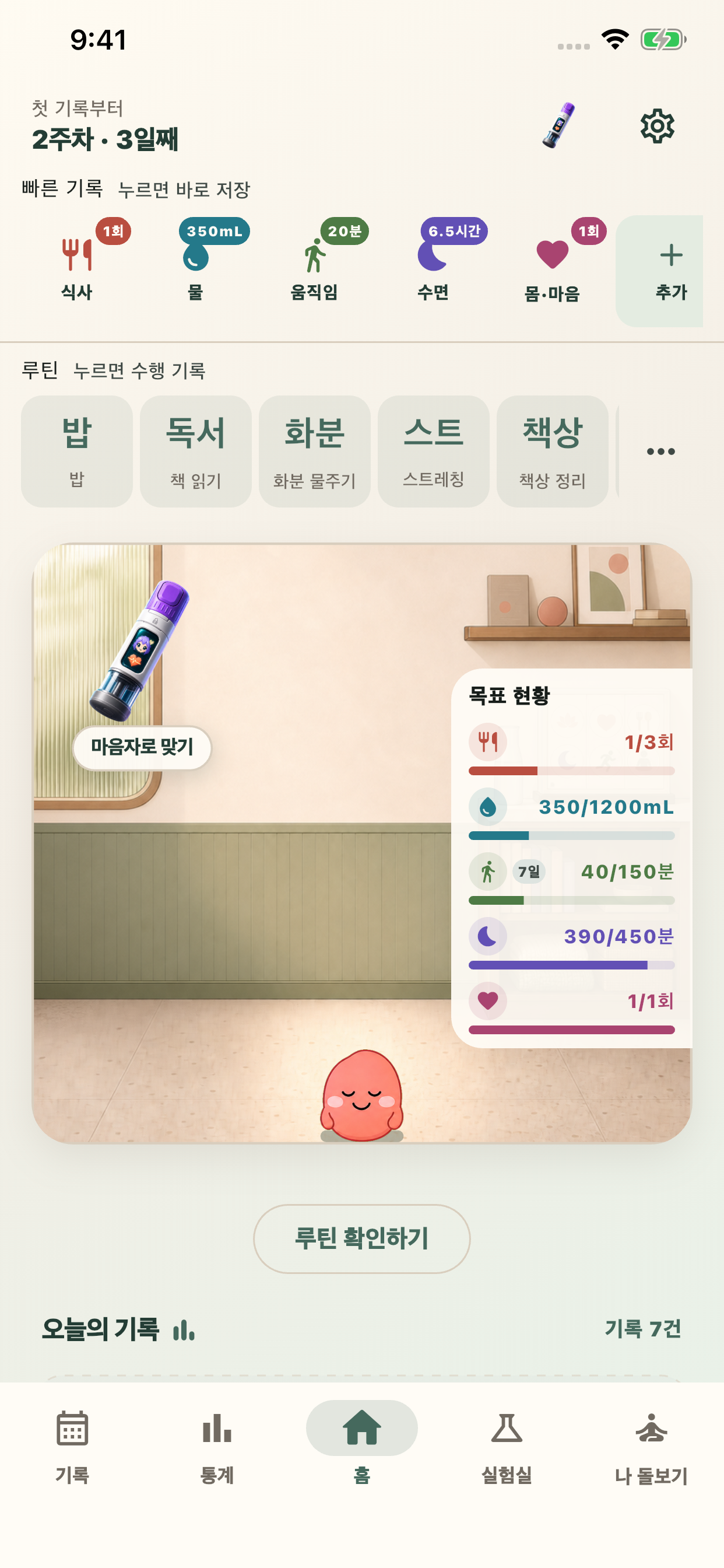
In Maumjaro, we applied this workflow to automate checks of the Android and iOS release consoles and collect feedback. Improvement tasks selected by the product owner are carried through planning, implementation, and review.
Actual app screen, captured with sample data on September 13, 2026.